
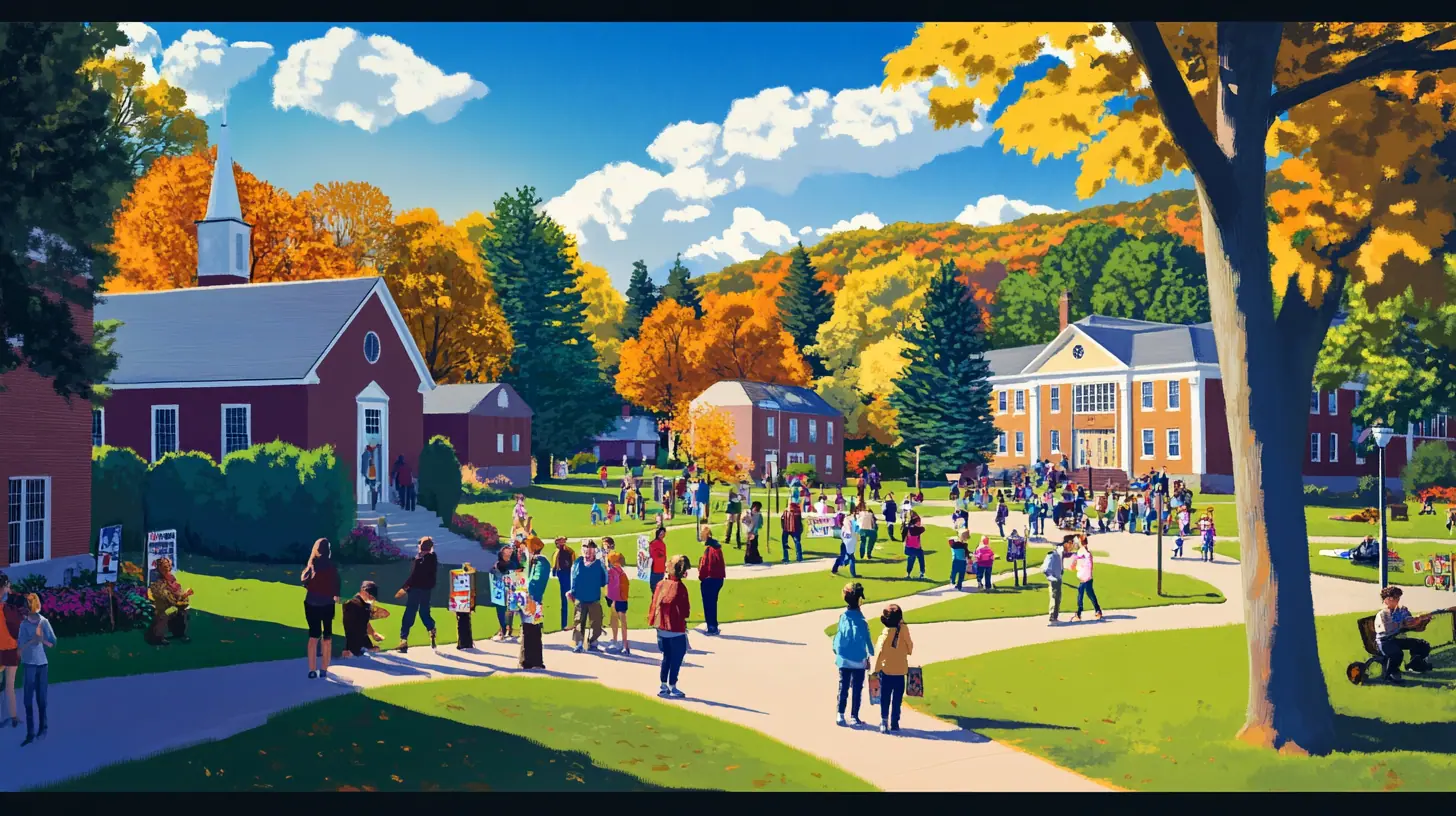
Top Reasons to Move to Grafton, MA
Grafton is the only article on this site covering its town, so it tries to carry the whole thing: where Grafton is, how it is organized, what is actually in it, and which of those things you can verify before you take anyone's word for it. Every item below is a matter of public record. There are no prices, no days-on-market figures and no forecasts, because the version of this article that ran previously had all three and none of them were sourced.
The town-level summary and Tim's coverage of Grafton sit on the Grafton community page; this is the long-form version.
Where Grafton is, and what it is made of
Grafton is a town of about 23 square miles in Worcester County. It borders Shrewsbury, Westborough, Upton, Northbridge, Sutton, Millbury and Worcester — so it sits directly against the city and directly against the rural towns to the south, which is most of what explains its character.
It is not one settlement. Grafton is three distinct areas, each with its own ZIP code: North Grafton (01536), Grafton (01519) and South Grafton (01560). That matters practically — mail, search results and listing descriptions all treat them separately, and the three differ in housing era, density and what they are near. If you are looking here, find out which of the three a property is in before you compare it to anything.
How it is governed
Grafton runs on open town meeting, with a Town Administrator and a five-member Select Board. As in Upton, that means the legislative body is the voters in the room: the budget, the bylaws and the capital spending are voted directly, and the warrant published before each meeting is the document that tells you what is coming.
Commuter rail, stated correctly
Grafton Station is in North Grafton and is served by the MBTA Commuter Rail Framingham/Worcester Line. A previous version of this article put it on the "Providence/Worcester line," which is wrong and would send someone to the wrong timetable.
This is the single biggest practical difference between Grafton and the towns south of it, Upton included: Grafton has a station of its own. Confirm current schedules, fare zone and parking with the MBTA, and ride it at your real departure time before you commit to it.
Tufts Cummings School of Veterinary Medicine
Tufts University's Cummings School of Veterinary Medicine occupies a campus of more than 500 acres in North Grafton, on the site of the former Grafton State Hospital, which operated from 1901 until 1973. The campus includes the Foster Hospital for Small Animals, the Hospital for Large Animals and the Tufts Wildlife Clinic, and it sits within a short walk of Grafton Station.
It is a genuine institutional anchor — employment, referral-level veterinary care and a large permanently non-residential land holding on one side of the town.
The Common, and the buildings around it
Grafton's central common still has the same outline it was given when the town's early settlers laid it out in the 1720s. The oldest building on it is the Grafton Inn, built in 1805 by the shoe manufacturer Samuel Wood. The bandstand is newer than it looks: it was built in 1935, on the site of the original meetinghouse, for the filming of MGM's Ah, Wilderness!
That kind of detail is checkable, which is the test this article is applying to everything in it.
Clockmaking, mills and forging
- The Willard House and Clock Museum in North Grafton preserves the workshop where Benjamin Willard began making clocks in 1766. His brothers Simon, Ephraim and Aaron took up the trade, and the family's clockmaking ran for three generations.
- The Washington Mills complex in North Grafton, built from 1826, was the core of a manufacturing settlement known as New England Village.
- Wyman-Gordon operated a 50,000-ton metal forge installed by the U.S. Air Force in 1955 — described at the time as the largest in the world.
Grafton was incorporated in 1735, the same year as Upton, and it industrialised harder and earlier than its southern neighbors. That shows up in the housing: mill villages with tighter lots and older stock, and then later development around them.
The town's founding history
Grafton was established on the site of Hassanamesit, one of the praying towns founded from 1647 under the missionary John Eliot. In 1727 the reservation was divided, with most of the land passing to English settlers and a smaller portion retained by seven Nipmuc families. The Hassanamisco Reservation remains a state-recognized Nipmuc reservation today.
That is the documented origin of the town and it is on the public record. It is recorded here as history rather than as an attraction.
Open space and the library
Grafton has conservation land, town recreation areas and a public library founded in 1867 and expanded in 2019. Rather than list amenities that may have changed, check the town's Conservation Commission and Recreation Department listings directly, and check MassGIS to see what land near a property is actually protected as opposed to merely undeveloped. Only one of those two conditions lasts.
Schools, stated as structure
Unlike Upton and Mendon, Grafton has its own school district — Grafton Public Schools — rather than sharing a regional one. That is a real structural difference: the budget is voted by one town rather than assessed across two, and the school committee answers to Grafton alone.
The district operates several schools across the town's three areas. Grade spans and building assignments do change, so get the current list and the assignment for a specific address from the district office, and pull performance data yourself from the Massachusetts DESE profiles rather than from any third-party score. This article does not rate the schools and will not.
What to check before you buy here
Grafton spans city-edge density and rural land, so the questions vary more than in a uniform town. For any property: whether it is on municipal water and sewer or private well and septic, and the Title 5 status if the latter; whether the road is a town-accepted public way; the permit history at the Building Department; the wetland picture from the Conservation Commission; and the assessor's property record card against the listing sheet. That sequence is set out in how to evaluate a house here before you make an offer.
If you are weighing Grafton against the towns immediately south of it — where lot sizes tend to be larger, there is no commuter rail, and well and septic are the norm — the closest comparison is Upton, which Grafton borders directly, and Northbridge and its mill villages on the other side.
What to do next
Drive North Grafton, Grafton and South Grafton in the same afternoon so the differences between the three are obvious. Ride the train from Grafton Station at the hour you would actually ride it. Read the current town meeting warrant. Then, if you want help comparing specific properties on their actual attributes, talk it through with Tim.
Before you rely on anything here
Towns change their bylaws, districts change their enrollment policy, and the market changes faster than any article. Confirm current details with the town department or district office that owns them before you act on them. Nothing here is legal, tax or financial advice.
Tim Harvey Real Estate is committed to the letter and the spirit of U.S. policy for the achievement of equal housing opportunity throughout the nation. We encourage and support an affirmative advertising and marketing program in which there are no barriers to obtaining housing because of race, color, religion, sex, handicap, familial status, national origin, sexual orientation, gender identity, age, ancestry, marital status, veteran status, genetic information, or source of income.
Send Tim a message
Tell him what you're trying to work out. He answers these himself.