
Top Reasons to Move to Northbridge, MA
Northbridge is the only article on this site covering its town, so it carries the whole thing. The single most important fact about it is the one most articles skip: Northbridge is not one place. It is a collection of separate mill villages, each with its own history, housing stock and street pattern, and you cannot evaluate a Northbridge property without knowing which village it is in.
Everything below is a matter of public record. A previous version of this article carried a median price, an appreciation implication, a list of named local businesses and a set of municipal programs with specific figures attached. None of it was sourced and some of it was wrong. It is gone.
The villages, which is the thing to understand first
Northbridge's principal villages are Whitinsville, Rockdale, Linwood, Riverdale and Northbridge Center, with several smaller named localities besides — Adams' Corners, Plummer's Corner, Prentice Corner and the Quaker District among them.
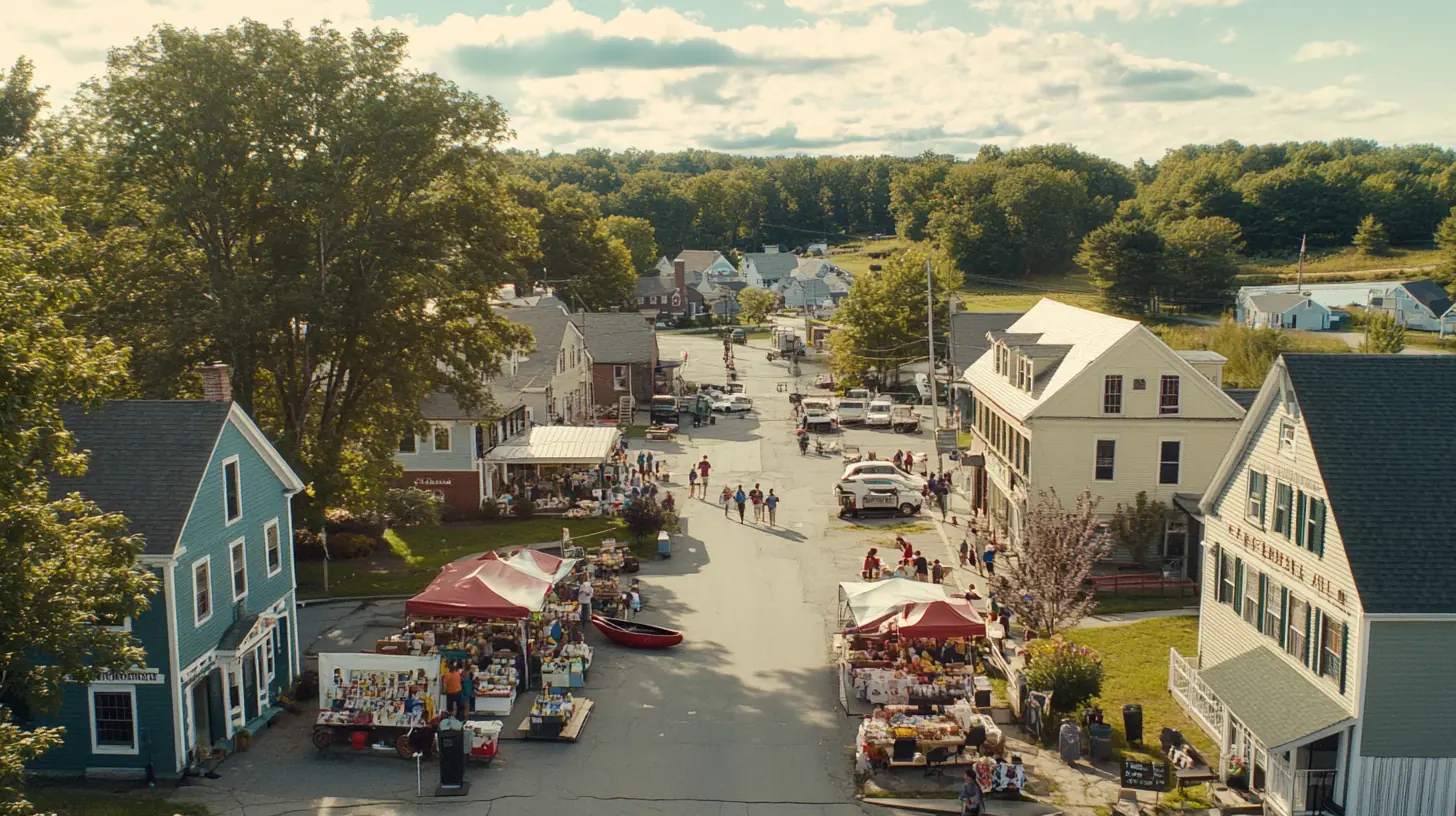
These are not marketing labels. They are historic settlements that grew around separate water-powered mill sites on the Blackstone, Mumford and West Rivers, and they are still physically distinct. Two Northbridge addresses can differ in housing era, lot size, density and street pattern far more than the shared town name suggests.
Whitinsville
Whitinsville grew at the Mumford River falls, south of Northbridge Center, and it became the town's industrial center of gravity. An early cotton manufactory was built near the iron foundry there in 1809, and by 1830 it had workers' housing and two more cotton mills. The Whitin family — following the matriarch Betsy Fletcher Whitin — built two connected businesses there, making cotton yard goods and textile machinery, and by the Civil War they were among the leading manufacturers in the Blackstone Valley. Whitin Machine Works operated in Whitinsville from 1831 until 1964, and at its height was the largest manufacturer of textile machinery in the world.
Whitinsville has been designated a mill village of national historic significance to America's earliest industrialization — one of only four villages given that designation by the Blackstone River Valley corridor commission. In housing terms it means a dense, planned village of nineteenth-century workers' housing and mill buildings, with all the questions that implies about age, systems, lot size and what has been altered.
Rockdale
Rockdale is a village of Northbridge. It is worth saying plainly, because it is frequently misfiled: it is not a neighborhood of Upton, and an article on this site previously made that mistake and even assigned it an Upton home value. That has been corrected in the piece on Upton's geography.
A mill village began growing at Rockdale in 1814, at what became an important transportation junction — the meeting of the Providence Road, the Central Turnpike and the Blackstone Canal. It did not become a substantial industrial center until the 1860s, when the Whitin family acquired the mill privilege there. Part of the village is recognized as the Rockdale Common Housing District.
Linwood, Riverdale and Northbridge Center
Linwood and Riverdale are the other mill villages that grew along the Blackstone and Mumford Rivers in the same period. Northbridge Center is the older administrative center, which the state's own survey of the town records as having lost much of its importance as the mill villages along the rivers grew past it — an unusual pattern, and the reason the town's civic geography does not sit where you might expect.
Where the town is
Northbridge covers about 18 square miles in the Blackstone River Valley of south-central Worcester County. It borders Grafton and Upton to the north, Sutton to the northwest, Mendon to the east and Uxbridge to the south. Route 146 and Route 122 run through the town, and I-90, I-395 and I-495 provide the regional connections.
Three rivers run through it — the Blackstone, the Mumford and the West River — which is the entire reason the villages are where they are. It also means that floodplain, wetland and dam infrastructure are live considerations for specific properties rather than abstractions. The West Hill Dam flood control project and its recreation area lie partly within the town.
How it is governed
Northbridge operates under open town meeting. As in the neighboring towns, the warrant published before each meeting is where the budget, the bylaws and any override or debt exclusion appear before they reach your tax bill.
The town was set off from Mendon and incorporated in 1772. An iron works had been established in the area as early as 1729, well before the cotton mills.
What happened after the mills
The textile industry declined from the 1920s, and the Whitin family divested their business interests by the 1950s. The town's own account describes the result as a transition from a company town to a suburban one. That transition is written into the housing: dense nineteenth-century village housing built for mill workers, then mid-century and later development filling in around and between the villages on larger lots.
This is genuinely useful when you are looking at listings. A Northbridge property is usually either village-scale and old, or later and more conventional, and the two have almost nothing in common as purchases.
Schools, stated as structure
Northbridge has its own district, Northbridge Public Schools, rather than sharing a regional one — a real structural difference from Upton and Mendon, since the budget is voted by one town. The district operates an elementary school, a middle school and a high school. Grade spans in this district have been reconfigured and are unusual enough that you should get the current arrangement directly from the district office rather than from any article.
Northbridge is also a member town of Blackstone Valley Regional Vocational Technical High School, which is located in Upton and admits through a separate application process rather than by address. Pull performance data yourself from the Massachusetts DESE profiles. This article does not rate the schools.
What to check before you buy in a mill village
Village-scale housing raises a specific set of questions, and they are the questions that decide whether a bargain is a bargain:
- Age-of-stock issues: knob-and-tube and ungrounded wiring, unlined chimneys, lead paint disclosure and deleading obligations on pre-1978 housing, asbestos in pipe insulation and siding, and buried or removed oil tanks.
- Water and wastewater: which parts of town are on municipal service and which are on private well and septic, with a Title 5 inspection required at transfer on septic.
- Flood and wetland exposure: non-negotiable in a town built on three rivers. Check FEMA flood maps, the Conservation Commission and MassGIS for any property near water, and check what your insurer will write before you commit.
- Road status: town-accepted public way or private way.
- Permit history and historic district status: the Building Department holds the permit record; and where a property sits in a district, find out whether it is National Register listing (honorific) or a local historic district with an actual review requirement for exterior work. They are not the same thing.
The order to work through all of that is in how to evaluate a house here before you make an offer.
How Northbridge compares to its neighbors
Against Upton to the north, Northbridge offers denser village housing and a different industrial history; Upton offers larger lots and more private well and septic. Against Grafton, which borders both, Northbridge has no commuter rail station of its own. Those are real trade-offs and worth testing on the ground rather than on a map.
The town-level summary and Tim's coverage of the town are on the Northbridge community page.
What to do next
Drive Whitinsville, Rockdale, Linwood and Northbridge Center in one afternoon. The differences between them will be obvious within ten minutes and they will tell you more than any listing description. Then pick specific addresses and pull the assessor card, the permit file and the flood map. If you want help comparing properties across villages that are genuinely not comparable, talk it through with Tim.
Before you rely on anything here
Towns change their bylaws, districts change their enrollment policy, and the market changes faster than any article. Confirm current details with the town department or district office that owns them before you act on them. Nothing here is legal, tax or financial advice.
Tim Harvey Real Estate is committed to the letter and the spirit of U.S. policy for the achievement of equal housing opportunity throughout the nation. We encourage and support an affirmative advertising and marketing program in which there are no barriers to obtaining housing because of race, color, religion, sex, handicap, familial status, national origin, sexual orientation, gender identity, age, ancestry, marital status, veteran status, genetic information, or source of income.
Send Tim a message
Tell him what you're trying to work out. He answers these himself.