
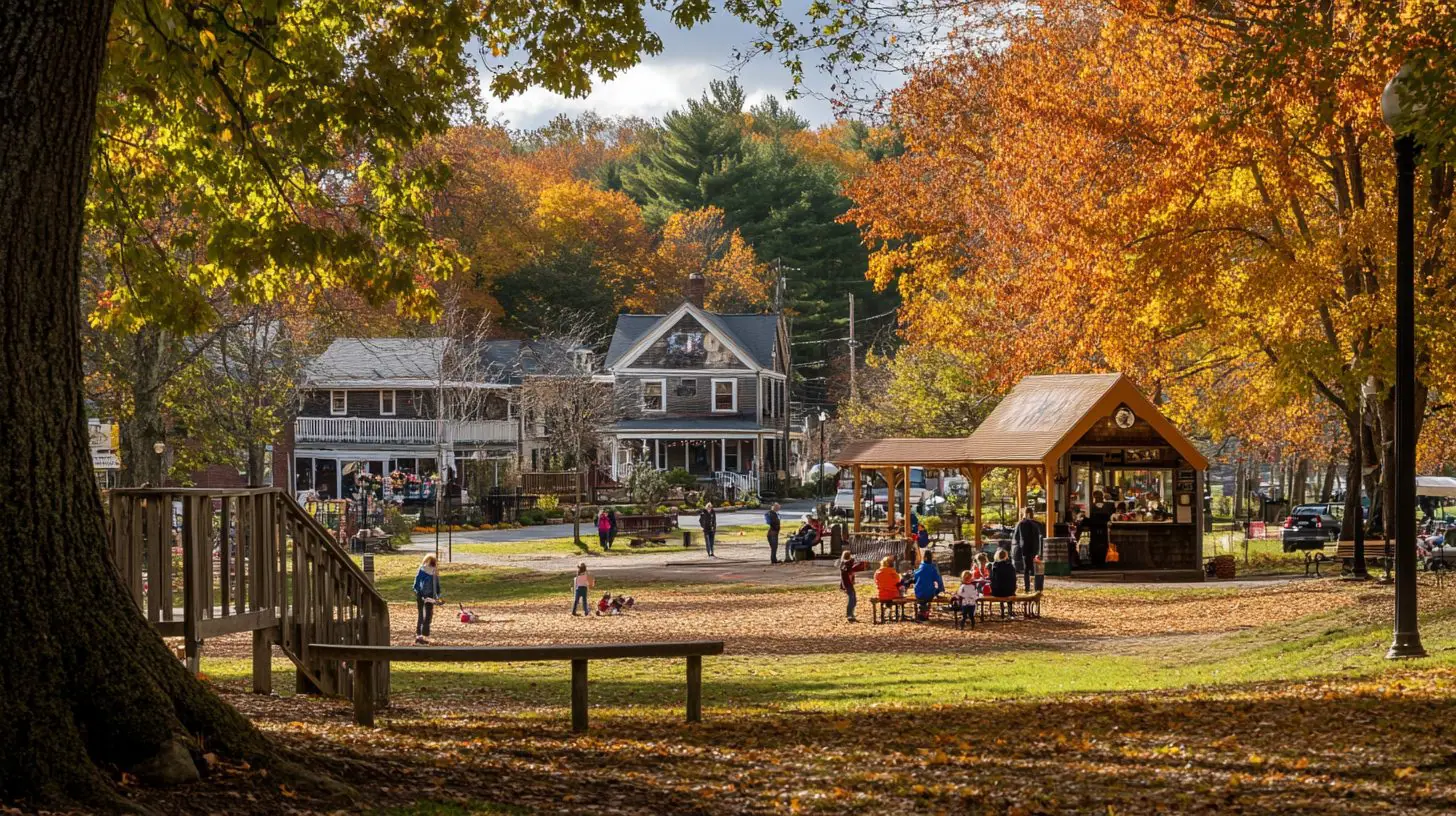
Understanding Upton: A Small Town Overview
This is the orientation piece for Upton, Massachusetts: where the town is, how it governs itself, what it does and does not provide, and which department owns which answer. It is deliberately plain. If you are trying to work out whether you understand Upton well enough to look at houses here, start with this and follow the links to the pieces that go deeper on history, day-to-day living, the trade-offs and the schools.
Where Upton is
Upton is a town in Worcester County, in central Massachusetts. Its neighbors include Grafton, Hopedale, Hopkinton, Mendon, Milford, Northbridge and Westborough, which puts it in the band of towns between Worcester and the I-495 corridor. I-495 is the nearest limited-access highway, and it is the route most people here use to reach the Mass Pike, Route 9 or points toward Boston and Providence.
Upton was incorporated in 1735 out of land taken from Hopkinton, Mendon, Uxbridge and Sutton. That origin is not trivia — it is why the town's boundaries are irregular and why some of its oldest roads run toward neighboring town centers rather than toward its own. If a boundary question ever matters to you for a specific parcel, the assessor's office and the recorded plan at the Worcester District Registry of Deeds are the authorities, not a map app.
How Upton governs itself
Upton runs on open town meeting, with a Town Manager and an elected Select Board of three members. Open town meeting means the legislative body of the town is the registered voters who show up. There is no town council standing between you and the budget. If you live here, you vote on the operating budget, the capital spending, the bylaws and the school assessment in person.
The practical consequences are worth understanding before you buy:
- The warrant is the document that matters. It is published before each town meeting and it lists every article to be voted. Overrides, debt exclusions, zoning amendments and the school assessment all appear there before they appear anywhere else.
- Volunteer boards decide a great deal. The Planning Board, Zoning Board of Appeals, Conservation Commission and Board of Health hold public hearings and publish agendas and minutes. What is happening near a property you are considering is usually already on one of those agendas.
- Changes are slower and more visible than in a city. That cuts both ways. You get more notice and more say; you also get decisions made by a room of neighbors rather than a professional body.
How big it is — and how to find out accurately
Upton is a small town by population and a moderate one by land area, with most of that land in low-density residential use, woodland and open space rather than in any dense center. You will see population figures quoted confidently all over the internet, including in older versions of this article, and they do not agree with each other.
So do not take a number from a real estate page. The current decennial and estimated population figures are published by the U.S. Census Bureau, and the town clerk keeps the voter and street list counts. Land area, assessed valuation, tax rate and per-capita levy are published by the Massachusetts Division of Local Services in its municipal databank. Those are the sources; anything else is someone's recollection.
What the town provides, and what it does not
The honest summary is that a town this size provides a defined and limited set of services, and the boundary between "the town does this" and "you arrange this yourself" is the single most common surprise for people arriving from a city or a larger suburb. Rather than list services that may have changed, here is who to ask about what:
- Board of Health — septic systems, Title 5, wells, and anything about private sanitation on a specific property.
- Department of Public Works / Highway — road maintenance, snow policy, whether a given road is town-accepted or private, water and sewer service where it exists.
- Building Department — permit history for a property, which is the fastest way to find out whether an addition, a finished basement or a deck was ever permitted.
- Conservation Commission — wetlands, buffer zones and what you can and cannot do near them. This governs more Upton lots than people expect.
- Assessors — the property record card, lot size, assessed value, and the tax rate.
- Town Clerk — street listing, voter registration, and the public record of what town meeting actually voted.
Municipal water and sewer service in Upton is limited rather than universal, and whether a specific address is served is a question for the town rather than an assumption you can make from the neighborhood. The day-to-day version of all of this — utilities, waste, recreation, what the recurring obligations actually cost you in time — is the subject of the practical guide to living in Upton day to day.
Private well and septic shape the housing stock
A large share of Upton's housing is on private well and private septic rather than municipal service. That is a structural fact about the town, and it drives a lot of what you should be looking at in a house here:
- Massachusetts requires a Title 5 septic inspection at transfer for properties on septic, with limited exceptions. Who pays for it, when it happens and what the result means for the closing are all negotiable, and all better settled early than late.
- A private well means water testing is your responsibility rather than a utility's, and the yield and quality of a well are property-specific.
- Lot sizes are larger where septic requires it, which is part of why the town looks the way it does.
None of this is a problem; it is a different set of obligations from municipal service, and it is knowable in advance. What to inspect, what the Title 5 report actually tells you and what the town's own records show are things to settle before you make an offer, not after.
Open space
Upton State Forest covers roughly 2,800 acres of state-owned land, primarily in Upton with smaller sections extending into Hopkinton and Westborough. It contains the last remaining Civilian Conservation Corps camp in Massachusetts. It is open to the public for hiking and other non-motorized recreation, and the current rules, parking and trail conditions are published by the state rather than by the town.
Beyond the state forest, the town and local land interests hold additional conservation parcels. If proximity to protected land matters to you for a specific property, the Conservation Commission and the state's MassGIS mapping are the way to confirm what is actually protected and what is simply undeveloped — those are very different things, and only one of them stays that way.
Schools, stated as structure
Upton and Mendon share the Mendon-Upton Regional School District. The towns have separate elementary schools and share the upper ones: Memorial Elementary in Upton and Henry P. Clough Elementary in Mendon (both through grade 4), then Miscoe Hill (5–8) and Nipmuc Regional High School (9–12). Blackstone Valley Regional Vocational Technical High School is located in Upton and admits through a separate application process.
That is the structure, and this article does not go further than the structure. Enrollment policy, school choice and program details change year to year, so confirm current placement with the district office and pull performance data yourself from the Massachusetts DESE profiles rather than from any third-party score. The full version, including how the vocational and charter routes differ, is in the reference on the Mendon-Upton grade progression.
The town's history is visible in its housing
Upton has a nineteenth-century manufacturing past, a town common, and a concentration of older buildings around the center that is recognized as a historic district. If you are drawn to the antique housing stock, understand what owning one involves before you commit to it — that is the subject of the history of the town and what owning its older housing stock involves.
What people find harder than they expected
Upton has no MBTA commuter rail station. The nearest station on the Framingham/Worcester Line is in North Grafton, and there are other stations on that line and on the Franklin Line within driving distance; current service, parking and fare zones are the MBTA's to confirm and they change. If you are commuting to Boston, you are driving to a station or driving the whole way, and it is worth doing that drive at the hour you would actually do it before you decide the distance is acceptable.
Retail, dining and services are limited relative to the towns along I-495, and the well-and-septic obligations above are real work. An honest account of the trade-offs — including the ones people underestimate — is in the honest account of Upton's trade-offs. It is the piece to read if you are trying to talk yourself out of the town as well as into it.
What to do next
Drive the town at a few different times of day. Pull the assessor's record for any address you are serious about and read the permit history at the building department. Look at the current town meeting warrant to see what the town is about to vote on. If you would rather have the same ground as a checkable list than as an essay, ten things about Upton you can verify in an afternoon covers it. The Upton community page collects the town-level detail in one place alongside the rest of the towns Tim covers, and if you want a second read on a specific property and the questions it raises, bring it to Tim.
Before you rely on anything here
Towns change their bylaws, districts change their enrollment policy, and the market changes faster than any article. Confirm current details with the town department or district office that owns them before you act on them. Nothing here is legal, tax or financial advice.
Tim Harvey Real Estate is committed to the letter and the spirit of U.S. policy for the achievement of equal housing opportunity throughout the nation. We encourage and support an affirmative advertising and marketing program in which there are no barriers to obtaining housing because of race, color, religion, sex, handicap, familial status, national origin, sexual orientation, gender identity, age, ancestry, marital status, veteran status, genetic information, or source of income.
Send Tim a message
Tell him what you're trying to work out. He answers these himself.